El Niño Preparedness Workshops
November 17 @ 9:00 AM – 2:00 PM
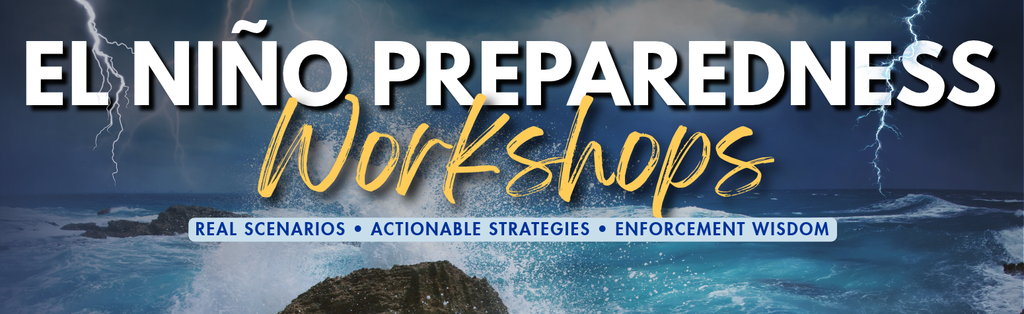
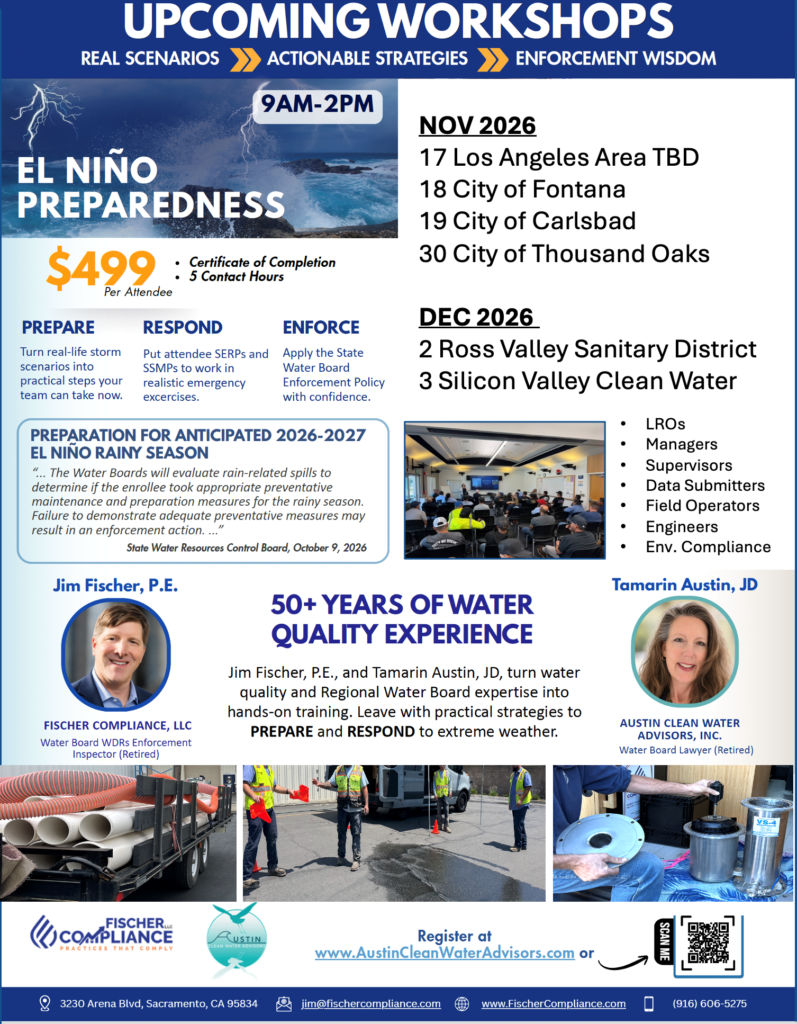
El Niño Preparedness is a hands-on workshop to help water quality and wastewater professionals prepare for the anticipated 2026–2027 rainy season. Through realistic storm scenarios and emergency response exercises, participants will practice turning spill situations into practical actions, strengthen their response plans, and learn how to apply State Water Board enforcement policy with confidence.
Jim Fischer, P.E., and Tamarin Austin, JD, will lead the workshops, which are designed for LROs, managers, supervisors, data submitters, field operators, engineers, and environmental compliance staff. Each session runs from 9 a.m. to 2 p.m. and includes a certificate of completion and five contact hours; registration is $499 per attendee. Locations are scheduled in Southern California on November 17–30 and in Northern California on December 2 and 3, 2026.
November 17
November 18
November 19

November 30
December 2
December 3
Before the Storm: Wastewater Workshop Q&As
A: Don’t let the first major storm become your agency’s first spill-readiness test. These new in-person workshops help wastewater collections and treatment plant supervisors, managers, field operators, and compliance staff strengthen emergency spill readiness and response operations to demonstrate proactive compliance and improve effectiveness. Climate resilience measures will also be covered for both collections and treatment facilities, including agency case studies and examples of innovative work products to help support agencies currently without extensive climate measures securely in place.
A: In-person classroom presentations, tabletop exercises, field demonstrations with our latest mobile training platform, and hands-on field spill readiness checks and demonstrations help attendees work to further identify, practice, and refine potential improvements prior to major wet-weather events. Learn alongside agencies in your region, network, and explore potential mutual aid arrangements. Competency checks will be integrated to reinforce learning objectives and document training records. Workbooks will also be distributed for completion and follow-up notes to further refine protocols, emergency readiness, and response operations. Certificates of completion will be distributed following the training for submittal to CWEA for contact hour credit.
A: Yes. Bring current agency SSMPs, SSMP Audits, Spill Emergency Response Plans, and sample completed field spill documentation for expert compliance review and feedback. Discuss agency-specific questions and identify follow-up actions.
Do not assume storms exempt an agency from future enforcement for noncompliance. The October 9, 2026 State Water Board notice calls for an up-to-date emergency response plan, preventive maintenance, reduced inflow and infiltration, correction of structural vulnerabilities, and adequate capacity. Agencies should document preparation and follow applicable spill-reporting requirements. Statewide enforcement totals reflect active oversight.
The October 12, 2026 letter directs treatment facilities to review and implement approved climate vulnerability and mitigation plans under their permits.
Water Board frameworks and resolutions support infrastructure resilience, vulnerable-community protection, natural infrastructure, and interagency coordination. Distinguish informational guidance from enforceable obligations in your agency’s permits and orders. Prepare for wet weather regardless of forecast uncertainty.
References: NOAA ENSO outlook · Sanitary Sewer Systems General Order · Water Board enforcement totals · Los Angeles climate framework
Presented by